Private Chef for Micro Weddings in Boston, Providence, and Newport
Private Chef for Micro Weddings in Boston, Providence, and Newport
A private chef micro wedding dinner starts at five guests, with no maximum, across RI and MA. I’m watching a couple walk through their Wellesley dining room on a cold January afternoon, thinking through what sixteen of their closest people gathered around the table in formal dress, laughing over the courses I’ll be plating in three weeks. They keep coming back to one question: why can’t anyone else do what I do.
They called three traditional catering companies. All three said no. The minimums were too high for a small wedding. The cost structure assumed a kitchen ten miles away and a truck full of chafing dishes. One even sent a menu with options like “chicken or fish,” standard, safe, forgettable.
A private chef micro wedding is what it sounds like: under twenty guests. It’s increasingly the move. People get married in the dining room of their childhood home. They rent a beautiful estate for the weekend in Barrington and invite their actual friends. They do it in November when the leaves are still gold and everything feels like gratitude instead of obligation. They do it in January when snow makes the landscape quiet and intentional. They skip the ballroom. They skip the performance.
But catering companies haven’t caught up.
I’m a private chef. I’ve spent ten years cooking for small groups, which means I’ve spent ten years solving the exact problem that traditional caterers have ignored. A micro wedding isn’t a small version of a big wedding. It’s different. Better, actually. And it needs someone who understands that from the ground up.
The Catering Problem No One Talks About with Small Weddings
Call a traditional catering company about a 12-person wedding. They’re polite. They’re professional. Then they quote you a $5,000 minimum. Or they don’t call back.
Here’s what’s happening: catering operations are built for scale. A team of ten in a commercial kitchen, loaded into trucks, set up in a ballroom, plated into a queue. The overhead doesn’t disappear just because your guest count is small. The labor, the insurance, the logistics, it all costs the same whether they’re feeding fifty people or one hundred and fifty. So they have a floor. It’s not personal. It’s just math.
But a micro wedding breaks that math. You don’t need a team of ten. You don’t need trucks. You need one skilled person who can arrive early, set up a beautiful table, cook at your home, plate in real-time, serve with attention, then clean and leave. You need someone who sees a 16-person dinner as an actual wedding, not a burden they’re subsidizing.
Restaurants won’t take private events this small. They have a menu. You get the menu. You get the timing they’ve designed for one hundred covers. You don’t get a conversation. You get consistency, sure. But consistency isn’t what makes a wedding feel intentional.
A private chef changes the equation entirely. You get a custom menu built around the season, around what you love, around your story. You get service that isn’t hurried because the chef isn’t racing to the next event in the same building. You get food that tastes like someone cared about your specific night, because someone did.
For more on the comparison, see private chef vs. catering.
Why Fall and Winter Weddings Work Better Than People Think
There’s a reason Boston and Providence couples have started choosing October, November, and January for weddings. It’s not because spring is booked. It’s because off-season is actually better.
Start with venue availability. Every beautiful home, every rental estate in Wellesley, Newton, Brookline, Bristol, or East Greenwich is available in November. Costs are lower, sometimes dramatically. The best places aren’t competing for your date. You get first choice on times, on setup, on the feeling you want. A January Saturday in a candlelit dining room costs a third of what June does.
Then there’s the guest experience. A micro wedding in fall, when the light is golden and brief, feels intentional. Everyone arrives knowing this matters. There’s no “we’ll catch up at the reception.” There are 15 of you and a table. You’re all in it together. In winter, snow outside, fire inside, the world feels focused down to this room. That’s not budget limitation. That’s atmosphere.
And there’s me. Off-season is when I have the kind of availability that lets me work with couples differently. I’m not juggling four events on a Saturday. I can arrive early on Wednesday and prep with you. I can source specific ingredients. I can think about the flow of your night not in terms of how fast the next event starts, but in terms of how you actually want to feel.
Off-season also means I can price differently. I’m not charging what the market will bear on peak dates. I’m charging fair rates for the work. That matters for micro weddings, which are already chosen by couples who want something small and intentional.
For Cape Cod off-season specifically, see the Cape Cod off-season private chef post.
SAMPLE MICRO WEDDING MENU
An October Evening
FIVE COURSES · MICRO WEDDING
FIRST
Scallop Crudo
Brown Butter Vinaigrette, Apple, Chive Oil
SALAD
Sourdough & Roasted Apple Salad
Honey Crisp, Pickled Red Onion, Sourdough Croutons, Baby Arugula, Apple Cider Vinaigrette
PASTA
Pumpkin Agnolotti
Brown Butter Sage Sauce
MAIN
Filet Mignon
Apple-Brandy Glaze, Sweet Potato Purée, Brussels Sprouts
DESSERT
Apple Cider Donuts
Spiced Caramel Drizzle, Vanilla Bean Gelato
Sample menu only · Yours is built around the two of you, your story, and the season.
A Sample Fall Micro Wedding Menu
The card above is one example pulled from the Fall 2025 menu. Every menu is fully custom; this is just a starting point. Every dish on the card uses ingredients from the actual Partum Events fall menu: apple-brandy glaze, sweet potato purée, brussels sprouts at peak, sourdough croutons from the bread service, the brown butter sage sauce that defines the pumpkin agnolotti.
The menu shifts based on what the couple wants. Fall wedding? I’ll work in chanterelles and root vegetables. Winter? Citrus, persimmons, port-wine reductions, the flavors that feel bright when everything outside is dark. Someone’s vegetarian, someone else has a shellfish allergy. I build a menu that works for your actual group, not a printed template.
For the full Fall 2025 menu and dish-by-dish detail, see the seasonal menus on the Partum Events site. For winter weddings (December through February), I pull from the Winter menu instead.
What a Private Chef Micro Wedding Actually Looks Like
Here’s the real sequence. I arrive at your home (or the estate you’ve rented) 2.5 hours before guests arrive. You’re not here yet, or you’re upstairs getting ready. I unload what I’ve brought. Ingredients I’ve sourced. Equipment I’ve tested. Plating that I’ve designed.
I set up in your kitchen or a rented kitchen nearby. Everything’s organized. Mise en place. Your actual chefs call it that, but what it means is: I’m ready. I’ve done this work before the evening starts so that I can be present during it. By 4:30 PM the kitchen smells like the dinner about to happen. Aromatics in oil. Stock reducing. The first proteins coming up to room temperature.
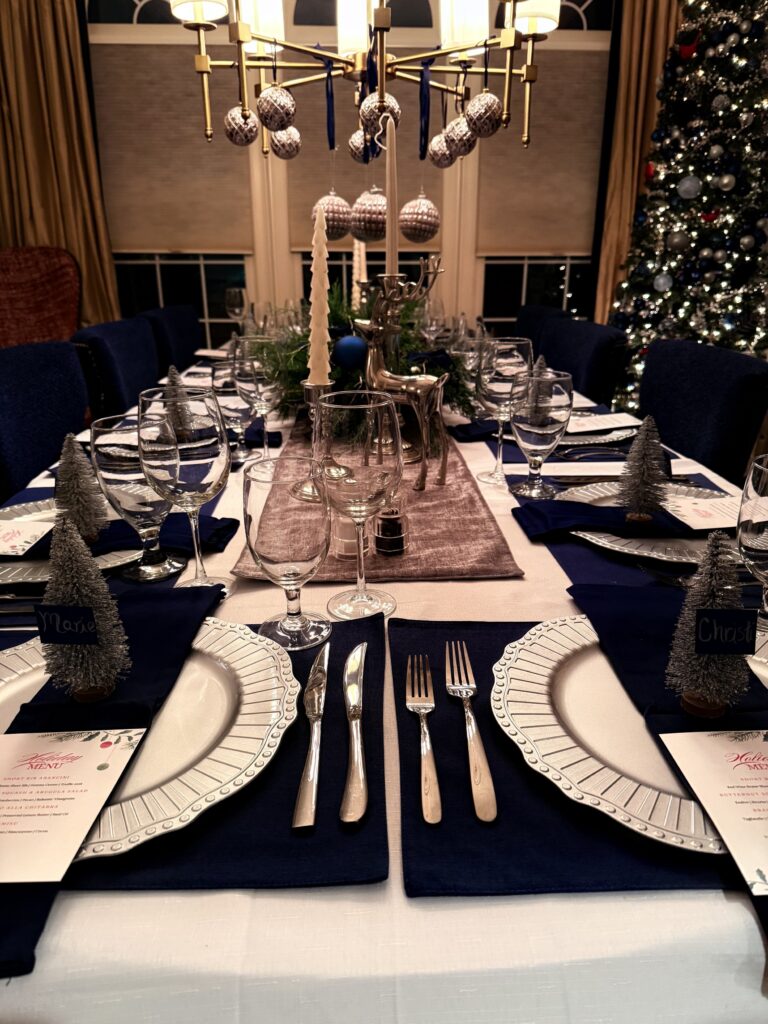
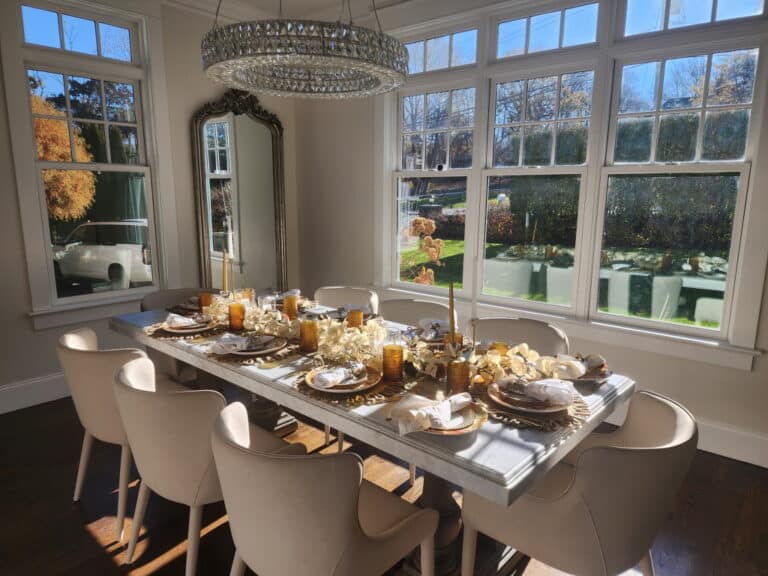
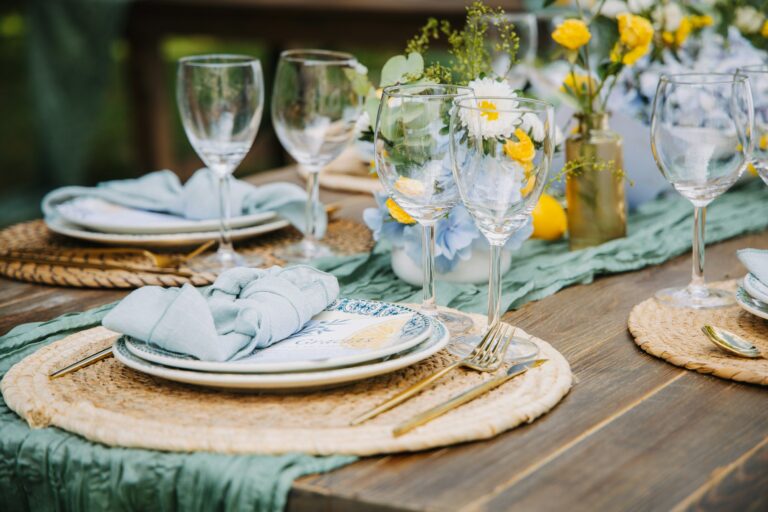
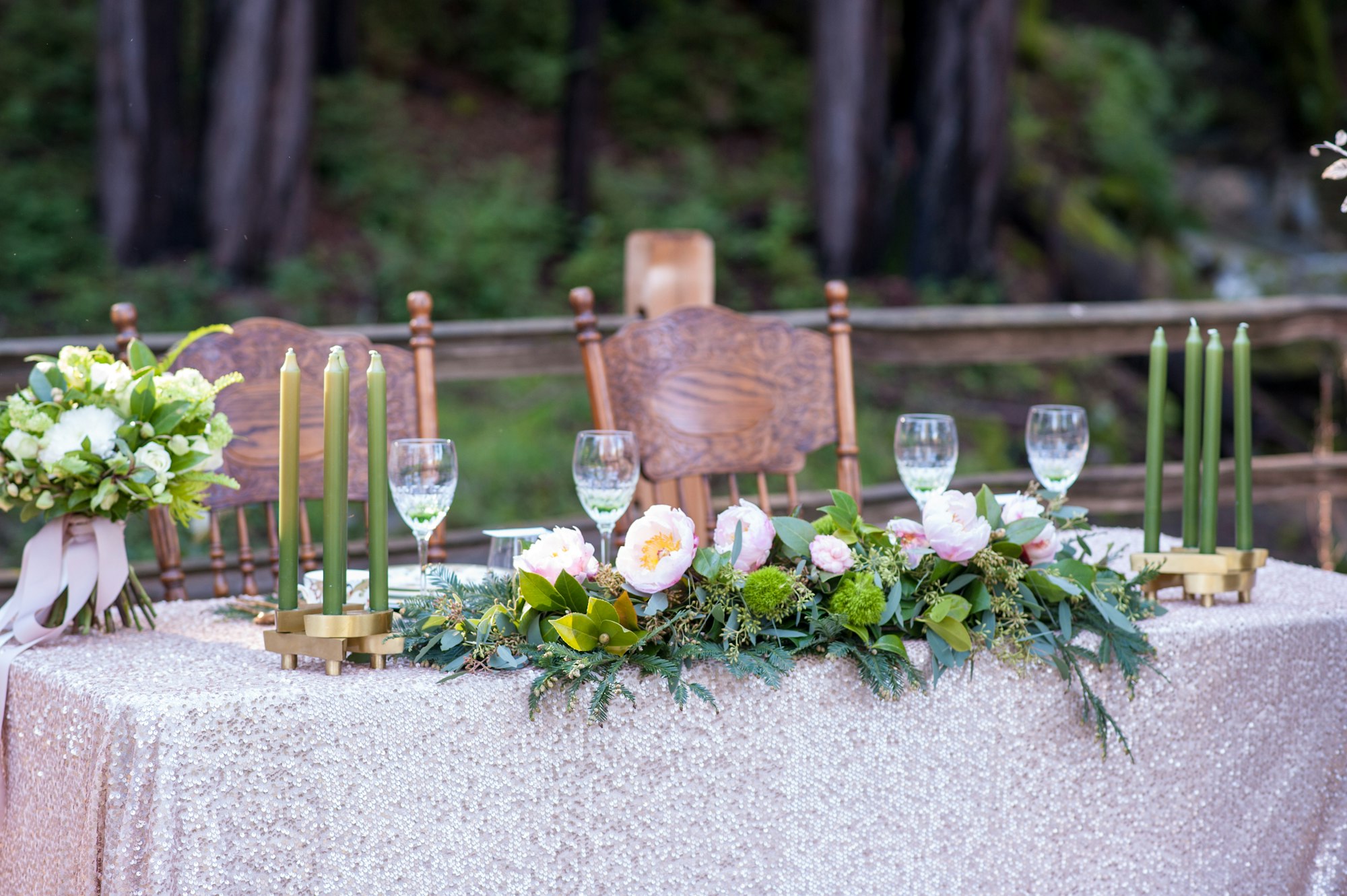
Your guests arrive. You’ve been married an hour. You’ve done photos. You walk into a dining room where the table is set. Good linens. Real flowers. Candles. It looks like you care, because you do. But you also know someone else handled the chaos of making that happen.
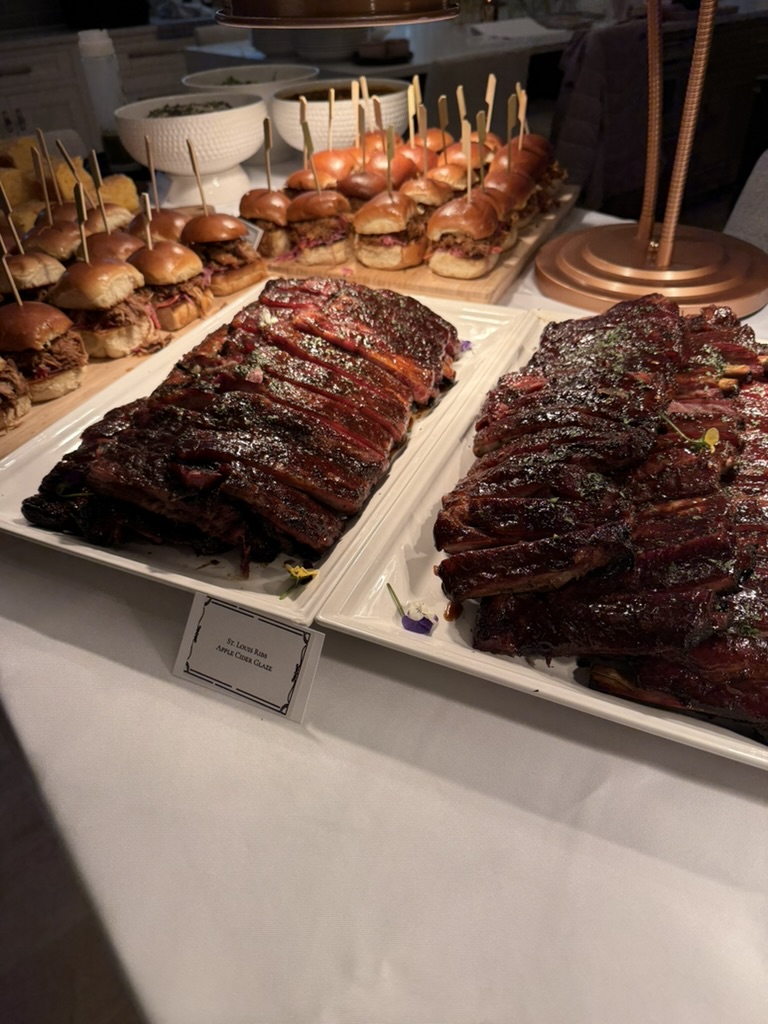
The evening moves at your pace. Your toast. Your first course. Maybe a soup course, maybe an intermezzo. Your main, plated on individual plates. Every plate the same, every plate finished with care. I’m plating in a kitchen you can’t quite see. I’m serving from the left. I’m clearing from the right. I’m doing what servers do, but I’m also the person who cooked it, so I know exactly what you’re tasting and why.
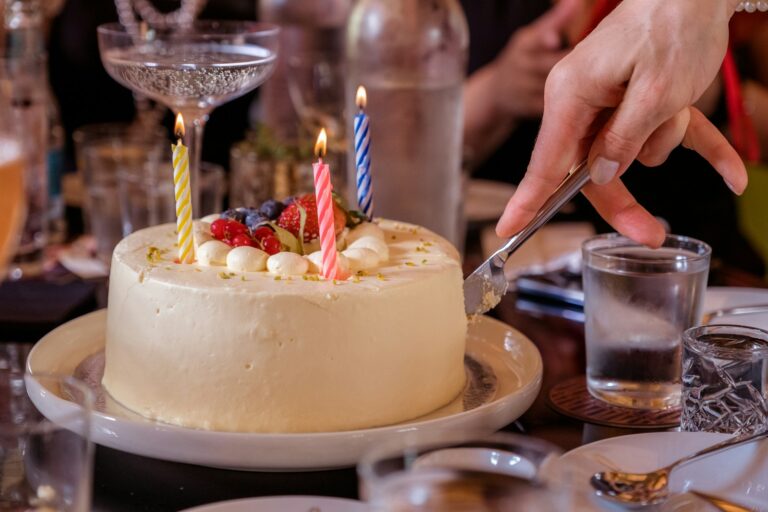
Dessert. Then I’m cleaning. The dishes go into your dishwasher or I hand-wash them. The kitchen is clean. The dining room is yours. I leave. You don’t see me after that. But you’re sitting there with 15 people you love, the table still warm, and the entire evening behind you, and in front of you, not a single dirty pot.
That’s the difference. You experience your wedding. You don’t spend it managing logistics.
The Evening, Hour by Hour
| Time | What’s Happening |
|---|---|
| 3:00 PM | Chef arrives at the home. Kitchen setup begins. Prep work continues. |
| 5:30 PM | Guests begin to arrive. The table is ready. Chef in the kitchen, not visible. |
| 6:00 PM | You and your party have just finished photos. |
| 6:30 PM | Seated for the first course. Plates warm, herbs cut that afternoon. |
| 7:15 PM | Pasta or fish course. Pace is yours. |
| 8:00 PM | Main course plated and served. |
| 8:45 PM | Dessert. Toast space. |
| 9:30 PM | Kitchen cleaned. Chef out. The night is yours. |
Rehearsal Dinner and Day-After Brunch as Add-Ons
A growing share of micro wedding bookings include the rehearsal dinner the night before, the wedding dinner itself, and a private chef brunch the morning after. The same chef across all three meals. The same kitchen. The same approach. Couples who book the full three-meal package get a more cohesive food experience than couples who patchwork between a restaurant rehearsal, a chef wedding, and a brunch place.
For more on Newport bachelorette and wedding-weekend planning, see the Newport bachelorette dinner ideas post.
Pricing for a Micro Wedding
Pricing details live in the cost guide. Full breakdown of how private chef pricing works in Rhode Island and Massachusetts.
Add-ons price separately. A rehearsal dinner the night before is its own quote based on the menu and guest count. The same goes for a Sunday brunch. Couples who book the full three-meal package usually find the total works out better than patchworking between a restaurant rehearsal, a chef wedding, and a brunch place.
Wine, spirits, and specialty rentals (linens, glassware, larger serving pieces) are discussed upfront when relevant. Gratuity is not included. Travel surcharges apply for events more than 90 minutes from Newport.
Minimum guest count: 5. No maximum.
How to Book
Off-season micro weddings have a more relaxed booking timeline than peak summer. For a fall or winter wedding, plan on booking at least eight to twelve weeks ahead. For October weekends and the week between Christmas and New Year’s, twelve to sixteen weeks is more realistic.
Send the date, the venue (your home, a rental, or an estate you’re renting for the weekend), the guest count, and any initial menu thoughts. A custom menu and quote come back within 48 hours.
For the broader hiring decision, see hiring a private chef in Newport or what to expect when hiring a private chef in RI.
PARTUM EVENTS · BOSTON, PROVIDENCE, RHODE ISLAND
A Wedding Worth the Day
Off-season fall and winter dates. Custom menu built for the two of you and the people who matter most.
Inquire About Your WeddingFrequently Asked Questions
How much does a private chef micro wedding cost?
Pricing details live in the cost guide.
What’s the minimum guest count?
Five guests. Below that, the per-person economics don’t work for a multi-course wedding format. Smaller dinners are still possible under the anniversary dinner format with a $1,000 booking minimum.
Is there a maximum?
There is no maximum. For larger weddings, additional service staff joins the booking so the format holds.
Can you accommodate dietary restrictions?
Yes. The menu is designed around the most restrictive eater. Gluten-free, dairy-free, vegetarian, vegan, pescatarian, severe nut allergies, celiac, kosher, halal. Nobody at the table eats a modified version of someone else’s plate.
Where do you cook?
Your home, an estate you’re renting for the weekend, a vacation rental, or any venue with a functional kitchen. I’ve cooked micro weddings in homes across Wellesley, Newton, Brookline, Needham, Weston, Dover, Medfield, College Hill, Federal Hill, the East Side, East Greenwich, Barrington, Bristol, Newport, and Boston. The kitchen adjusts to whatever the space is. The menu adjusts to what the kitchen can do.
How far in advance should I book?
Eight to twelve weeks for fall and winter weddings. Twelve to sixteen weeks for October weekends and the holiday weeks. For peak summer dates, longer.
Can my parents book this as a wedding gift for us?
Yes. Gift bookings for micro weddings are a regular request. The booking is held in the gift-giver’s name. The menu consultation happens with the couple once the date is locked.
What if we want a rehearsal dinner and a brunch too?
Common, and often the better experience. The same chef across all three meals means the food has a consistent voice across the weekend. Rehearsal dinners and brunches are priced separately based on the menu and guest count.
Is the chef present during the ceremony?
Up to you. Some couples want me to disappear into the kitchen and not be visible during the ceremony. Others have me set up appetizer stations near the ceremony space. Either way, I’m not a service problem you need to manage during the vows.
Do you serve Rhode Island and Cape Cod for micro weddings too?
Yes. The format works equally well in Newport, Providence, the East Bay, Cape Cod, and the Boston metro suburbs. See the Private Chef Newport, Private Chef Cape Cod, Private Chef Boston, Private Chef Providence, or Private Chef Rhode Island statewide pages.
Why does small benefit most from a private chef?
Because the format was built for it. Custom menus, fresh on-site cooking, plated service, and full cleanup all scale down to twelve guests in a way they cannot scale up to two hundred. For more on this, see why small events benefit most from a private chef.
Next Steps
If you’re planning a micro wedding in Boston, Providence, or Rhode Island, reach out with your date, venue, and guest count. A custom menu and quote come back within 48 hours.
For more on small-event private chef bookings, see why small events benefit most from a private chef and private chef vs. catering.
Reserve your private chef micro wedding date.
Send the date, headcount, and a rough sense of what you want the night to feel like. I’ll come back with a custom menu and quote within 24 hours.
Reserve your date